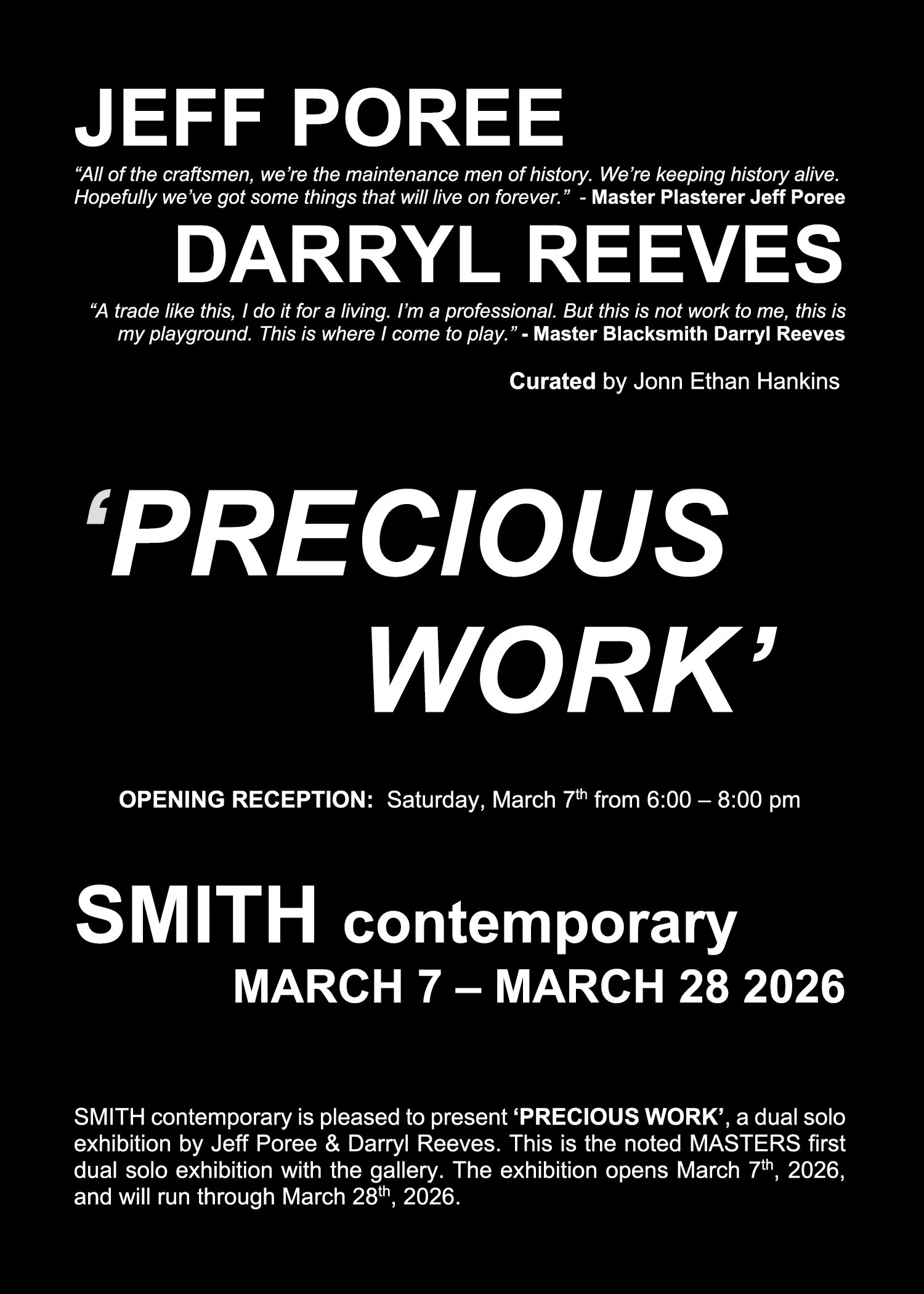
Ancestral Artistry: The Influence of Africans and Creoles of Color on Louisiana Architecture explores the rich architectural legacy that began 300 years ago with the arrival of enslaved Africans skilled in the building trades in French colonial Louisiana. This special film screening is presented in partnership with the Smithsonian Center for Folklife and Cultural Heritage. The film highlights these trades and tells the stories of contemporary master craftsmen in New Orleans, including plasterer Jeff Poree, and blacksmith Darryl Reeves.
https://nmaahc.si.edu/events/ancestral-artistry-influence-africans-creoles-color-louisiana-architecture
"That the master builders of New Orleans are not better known or more widely recognized can be traced in part to the conventional hierarchies commonly used to evaluate creativity. But if one were to probe the history of the words associated with creativity, this scheme which favors works done in the studio over those done on the street would readily be inverted. In the English language the word "craft" has a much deeper history than the word "art." The Oxford English Dictionary locates one of the earliest appearances of "craft" in the writings of King Alfred in 893. Associated with the attributes of strength, power, might, and force, the term was soon linked to the ideal of skill in planning and performance. "Art," being a loan word from Latin via French, did not make its way into regular English usage until around 1225 and for centuries it was treated as a synonym for craft or skill. That "craft" is linguistically the senior brother to "art" suggests that those who work in the building trades have been rather arbitrarily and unfairly overlooked. Even a cursory assessment of what they do would reveal that in their efforts they enact the oldest and deepest definition of craft. By creating sturdy structures, building tradesmen provide us with a reassuring context in which subsequent civilizing acts might flourish; culture commences from the sense of place. What they fashion for us is nothing less than the contexts of our daily experiences."
-John Michael Vlach, PhD